
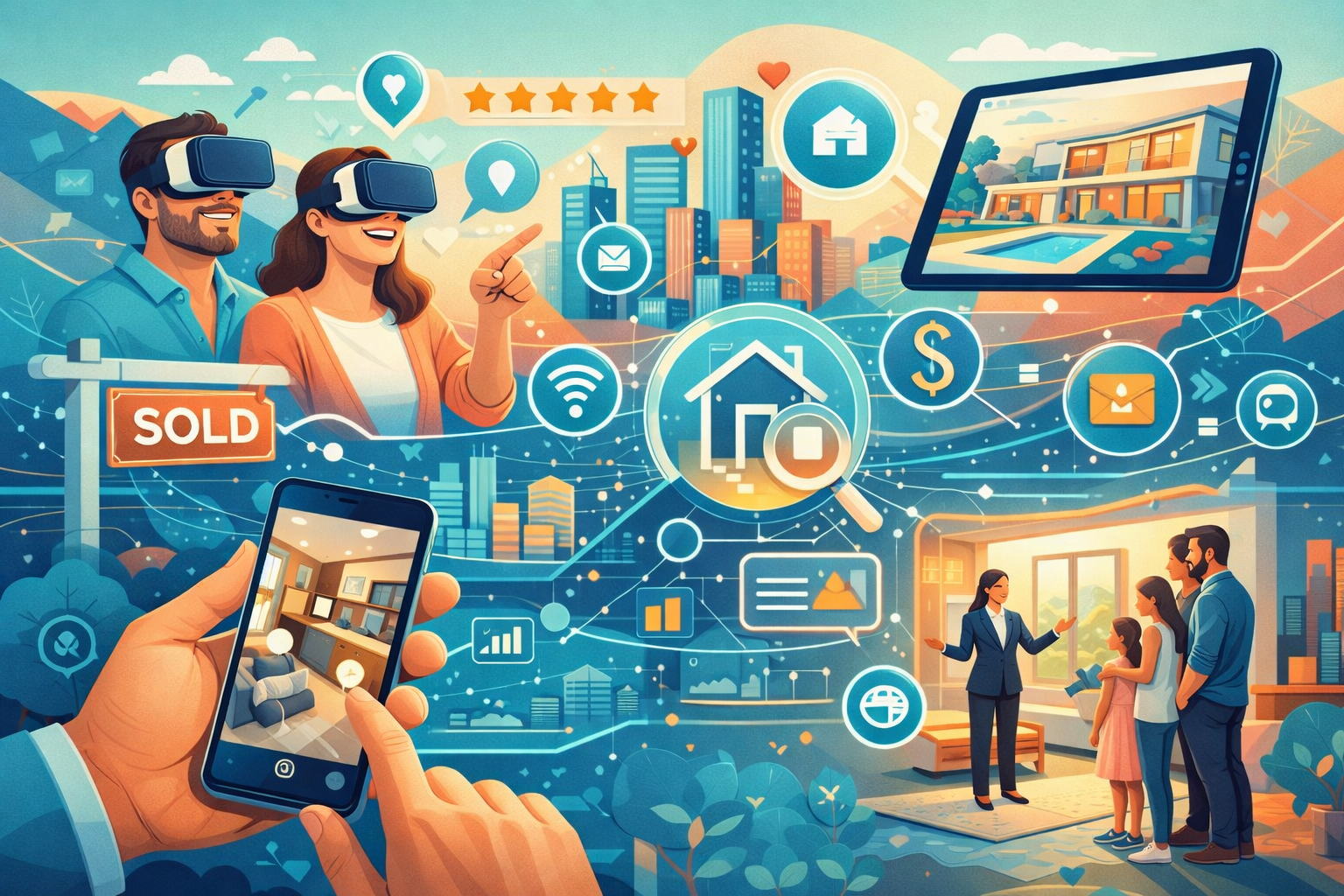
The internet hasn’t just revolutionised how we communicate, work and shop — it has also reshaped the real‑estate market. Today, property listings compete for attention alongside content portals, apps, social networks and many other sources. It has never been easier to search, filter and compare homes and apartments. But this autonomy for the buyer comes with a challenge: how do you make a property stand out in this sea of options?
From adverts to experiences: the challenges of digital exposure
In the past, property seekers relied almost exclusively on agents and newspaper ads. Today, platforms such as Instagram, Facebook, TikTok and property portals have become showcases of opportunity. But this abundance of information can be a double‑edged sword. Without a professional positioning, many listings fade away or are judged only by price, size or photos. A study in the magazine Kdea360 highlighted how digitalisation has changed buying habits in Brazil’s real‑estate market and emphasised that the way a property is presented determines whether it attracts and retains interest.
At the same time, digital‑marketing specialists warn of the risks of amateurism. Posting a property without proper preparation — whether because of poor photos, unconvincing copy or imprecise technical information — can deter buyers and even reduce the perceived value. Personalisation is essential: more than listing features, you need to connect a home’s attributes with the lifestyle of its target audience.
The new role of the real‑estate marketing professional
Many people still think that an agent’s job is limited to brokering purchases and sales. But in the digital age, being a mediator is only the starting point. Today, building a real‑estate marketing strategy involves:
• Market research and audience profiling: understanding the aspirations and priorities of buyers and sellers in each market niche.
• Content curation: selecting photos, videos and copy that convey each property’s value proposition; investing in virtual tours, films, interior‑design staging and attractive graphics, always respecting local laws.
• Copywriting and storytelling: aligning the text of the listing with emotions and experiences. Good copy awakens the desire to live in that space and anticipates the sensations visitors will have.
• Choice of distribution channels: social networks, specialised portals and personal pages must be chosen according to the audience. For example, the TikTok shop has already influenced retail by combining short videos with entertainment. It isn’t hard to imagine similar features for real‑estate products in the near future.
• Data analysis and optimisation: measuring page views, likes, comments, dwell time and conversions, then adjusting the strategy according to user behaviour.
With these elements, selling becomes a consequence of a process built in stages. Rather than simply saying “there is an 80 m² apartment with two bedrooms,” the value message must explain why that apartment makes sense for the buyer’s story — whether because of its view, its up‑and‑coming neighbourhood or its architectural style.
More than social networks: building authority
The future of real‑estate marketing calls for creativity and authenticity. Professionals who can convey sensitivity as well as technical knowledge don’t just sell properties — they build reputations. Sharing behind‑the‑scenes moments (such as staging a home for photos or the dynamics of a negotiation) humanises the brand and brings the audience closer, strengthening bonds.
By saying “my job isn’t to sell houses, but to build perception and experience,” I emphasise that the aim goes beyond closing contracts. It means that:
• Giving my best means staying in constant evolution: learning about architecture, the market, décor trends and marketing. This involves courses, reading and following international and regional case studies.
• Acquiring knowledge and refining the eye: visiting exhibitions, studying photography, understanding how colours affect rooms and being curious about design. This continuous search directly impacts how we present each property.
• Learning something new and sharing it: sharing experiences on social networks, on the blog and with clients turns knowledge into perceived value. Sharing knowledge builds trust.
For this reason, when we build perceptions we create a buying experience. Presenting a home with the right lighting, music and relevant information helps the buyer imagine themselves living there. Advertising a property on multiple platforms, with tailored messages, shows respect for how different people consume content.
Conclusion: marketing as a bridge between people and properties
Digital transformation makes it clear that buying a home is no longer just a transaction; it is a decision based on experiences. The marketing plan for a property needs to be as strategic as a brand’s marketing plan: it involves presentation, communication and commercial strategy. Photos, copy and video are not enough on their own; they must complement each other and evoke emotion.
My role, as a marketing professional specialising in real estate, is to connect people with possibilities. The perfect home might be hidden among thousands of ads, but careful curation, professional presentation and the art of storytelling enable a buyer to recognise that potential. By combining technical knowledge with sensitivity, we create genuine value for sellers and buyers — and thus transform the real‑estate market.